


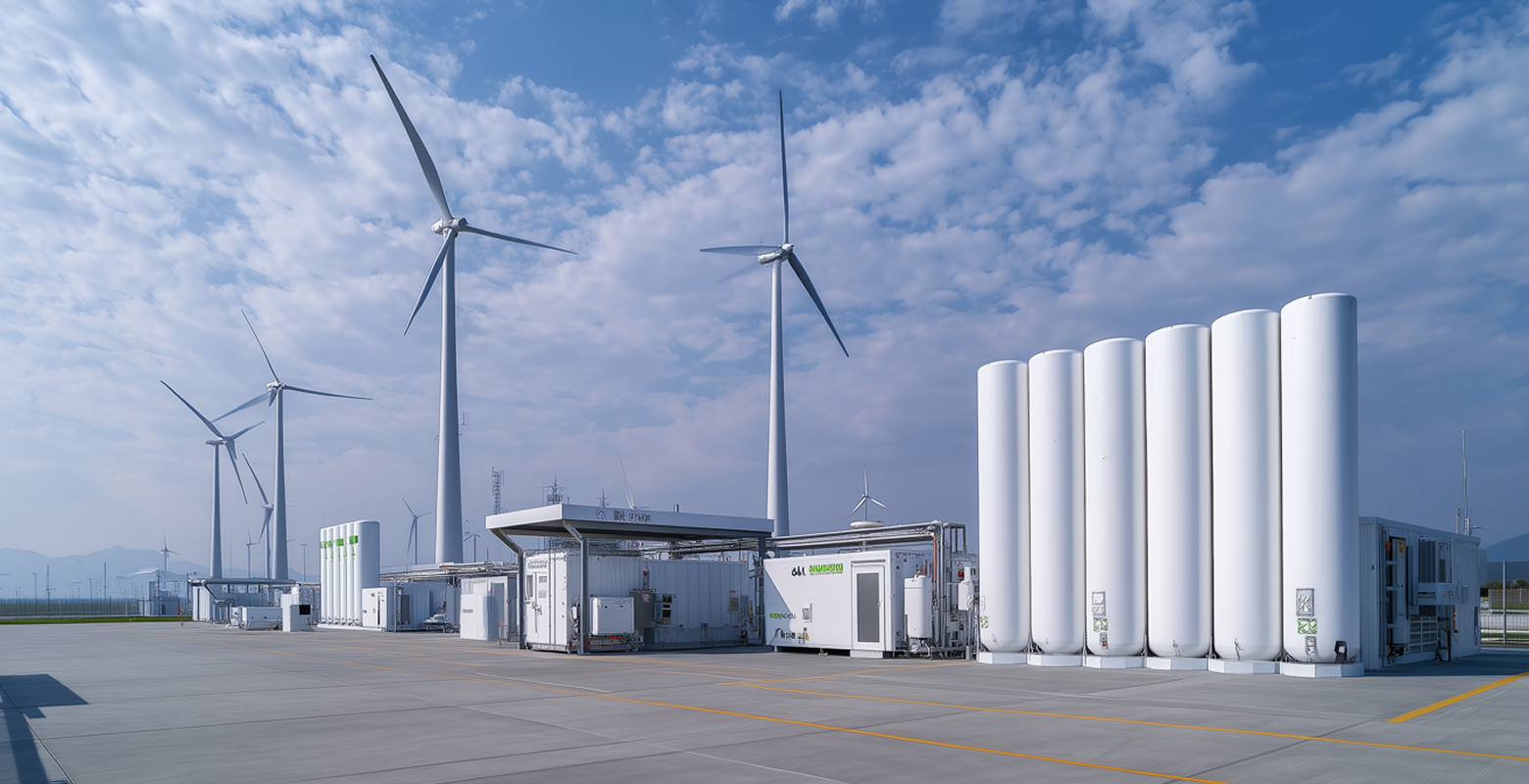
Examining the legal infrastructure supporting green hydrogen, solar energy, and renewable partnerships between Europe and the Arab world.
The energy relationship between Europe and the Arab world is undergoing a structural transformation. For decades, this relationship was defined by hydrocarbon exports from the Gulf and North Africa to European markets. Today, it is being reshaped by a shared imperative: the transition to renewable energy. Both regions bring complementary advantages to this transition, and the legal frameworks governing their partnership are evolving rapidly to keep pace.
The EU’s Hydrogen Ambitions
The European Union has placed hydrogen at the centre of its decarbonisation strategy. The REPowerEU Strategy of 2022 set the ambitious target of producing ten million tonnes and importing ten million tonnes of renewable hydrogen by 2030. The revised Renewable Energy Directive, which entered into force in 2023, includes binding targets for renewable hydrogen uptake in industry and transport.
The regulatory framework was further strengthened in 2024 with the entry into force of the Hydrogen and Decarbonised Gas Market Package, which supports the creation of dedicated hydrogen infrastructure and an efficient hydrogen market. On 8 July 2025, the EU adopted a delegated act introducing a comprehensive greenhouse gas emission methodology for low-carbon hydrogen, requiring a minimum of 70 per cent emission savings compared to unabated fossil fuels. These targets create enormous import demand that Europe cannot meet through domestic production alone. The EU needs partners with abundant renewable energy resources and the industrial capacity to produce and export green hydrogen at scale.
Arab States as Renewable Energy Producers
The Arab world, and the Gulf states in particular, are uniquely positioned to meet this demand. The Middle East’s high solar irradiation levels make it one of the most cost-effective regions globally for solar-powered green hydrogen production.
Saudi Arabia’s NEOM Green Hydrogen Company, a joint venture between ACWA Power, Air Products, and NEOM, is building the world’s largest utility-scale hydrogen facility powered entirely by renewable energy. The project will produce up to 650 tonnes per day of green hydrogen and 1.2 megatonnes per year of green ammonia for export. Germany has opened a hydrogen diplomacy office in Riyadh to implement a 2021 memorandum of understanding that provides for Germany to supply electrolysis systems in exchange for green hydrogen exports.
In the UAE, ADNOC has taken a 43 per cent stake in Masdar’s green hydrogen business, with the partnership aiming to consolidate renewable energy and green hydrogen under a single brand. An industrial-scale green hydrogen-to-ammonia project by TAQA and Abu Dhabi Ports features a two-gigawatt solar photovoltaic plant with a pipeline connection to Khalifa Port for export to Europe and East Asia.
The North African Corridor
North Africa is emerging as a critical link in the EU-Arab energy transition. The SoutH2 Corridor, a 3,300-kilometre pipeline project connecting Algeria and Tunisia to Italy, Austria, and Germany, aims to deliver up to four million tonnes per annum of renewable hydrogen to European industrial centres. In 2024 and 2025, under the Global Gateway initiative, European and international institutions committed a total of 22 billion euros to support sustainable connectivity in Central Asia and energy infrastructure including the hydrogen corridor.
The International Solar Alliance has identified Egypt, Morocco, Namibia, and Ethiopia as potential major green hydrogen hubs given their vast renewable energy potential. For European legal practitioners, these projects represent complex, multi-jurisdictional transactions involving project finance, regulatory approvals, offtake agreements, and cross-border pipeline infrastructure.
Legal Challenges in EU-Arab Energy Partnerships
Several legal challenges must be addressed to realise the potential of EU-Arab renewable energy partnerships.
Regulatory equivalence: Hydrogen produced in Arab states for export to Europe must meet the EU’s regulatory definitions of renewable or low-carbon hydrogen. The July 2025 delegated act on emission methodology provides clarity, but producers must establish robust certification and verification systems to demonstrate compliance.
Project finance structures: Large-scale hydrogen and solar projects require complex financing structures that bridge different legal systems. Project finance in the GCC often involves Islamic finance instruments alongside conventional debt, and European export credit agencies alongside Gulf sovereign wealth fund investment. Harmonising these structures requires expertise across multiple legal traditions.
Offtake agreements and pricing: Long-term hydrogen offtake agreements must allocate risks around production volumes, pricing mechanisms, transportation costs, and regulatory changes in both the producing and importing jurisdictions. The absence of a liquid spot market for green hydrogen makes contract design particularly important.
Environmental regulation: The UAE’s Federal Decree-Law No. 11 of 2024 on the Reduction of Climate Change Effects, effective May 2025, mandates greenhouse gas monitoring, reporting, and verification. European companies partnering with Gulf producers will need to ensure alignment between local environmental compliance and EU taxonomy requirements.
A Defining Partnership of the Coming Decade
The energy transition represents perhaps the most significant opportunity for deepening EU-Arab economic partnership in a generation. The legal frameworks on both sides are evolving to support this transition, but significant work remains to harmonise regulatory standards, develop bankable project structures, and build the cross-border infrastructure that will connect Arab renewable energy production to European demand.
The EU-Arab Legal Summit’s panel on energy, infrastructure, and project finance will bring together practitioners from both regions to discuss the legal architecture that will underpin this transformation.
The EU-Arab Legal Summit takes place on 4 June 2026 in The Hague, Netherlands. For more information, visit our website or contact the organising team.


